

Comedy as a Weapon for Survival Pt. III

Originally published on The Shabbat Drop by Miranda Lapides on August 23, 2024.
This is a series in which I dive into topics I’ve learned about from YIVO’s free online class on Jewish humor, “Is Anything Okay?” If you missed earlier laughs, catch up on part one here and part two here. I originally said this was going to be a three-part series, but there are so many goodies and information in the class, I’m extending it to four or five parts! Enjoy!
In previous Drops, we talked about Jewish humor in the Torah and Talmud, and in the shtetl. Now we’re crossing the Atlantic to…
Comedy in the City - The Heyday of the Jewish Lower East Side (1880-1920)
Yiddish Theater and Vaudeville
Just like the shtetl, tenement living was not for the faint of heart. That’s why there were a lot of jokes about surviving tenement life, like this gem:
A landlord was asking two thousand rubles a year for rent on an apartment, and a prospective renter asked him, “Why are you charging so much money for rent?” “Why not?” The landlord responded. “It’s got three rooms and a kitchen!” “And a stable?” The renter asked. “Why do you need a stable?” “For the horse you’ll surely include at that price!”
At the time, variety shows and theater were popular forms of entertainment, and many Jews found themselves drawn to the stage—even though, at the time, it wasn’t considered the most respectable profession. Antisemitism created barriers in many other fields, making it tough for Jews to find work elsewhere. Despite the stigma, they embraced these roles, contributing to the vibrant world of entertainment.
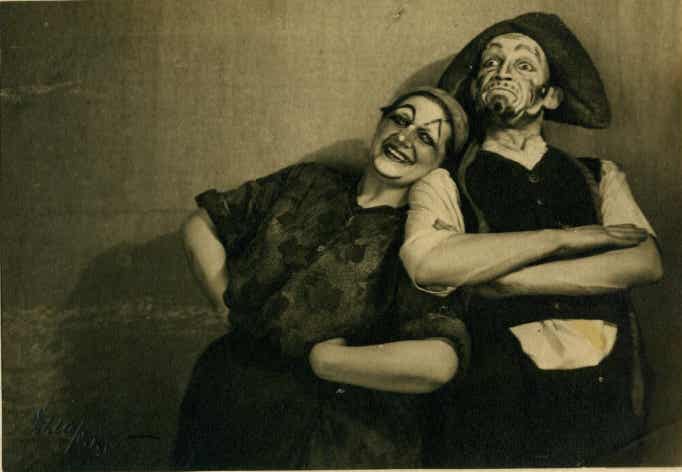
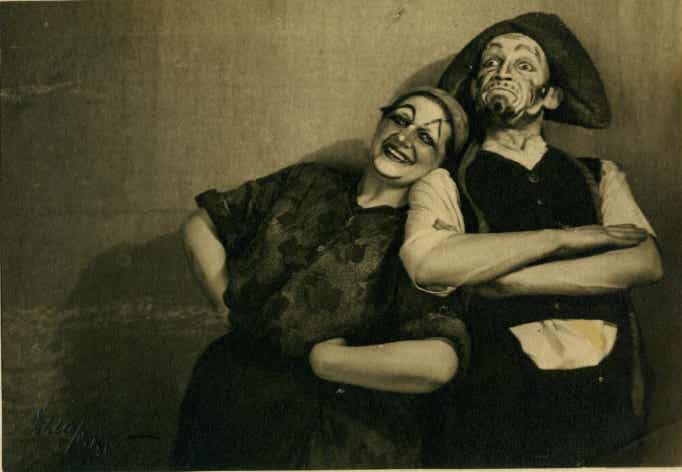
Jewish theater wasn’t limited to New York City - here’s Iustina Minkova and Solomon Mikhoels in a production of Sholem Aleichem’s “200,000,” in Moscow, 1923 (The Theatre Times)
These Yiddish vaudeville and variety shows that commented on daily life and values would go on to influence comedians of the Borscht Belt. But we’ll get to them in the next part…
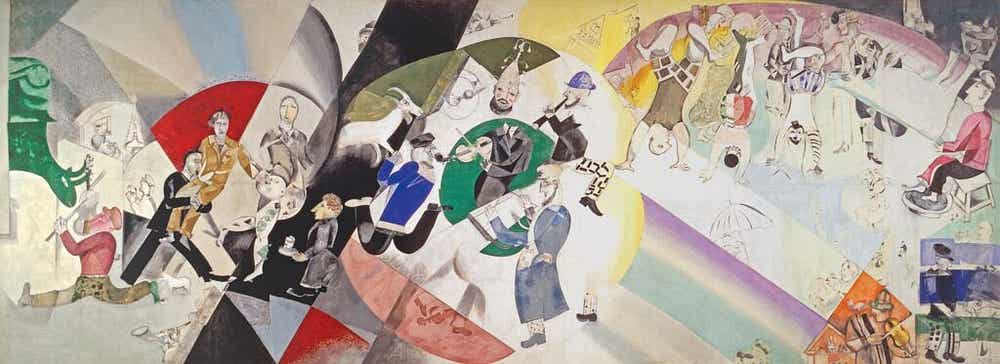
Marc Chagall’s “Introduction to the Jewish Theatre,” 1920
The shows combined aspects of Old World culture, new American culture, and the transitional problems immigrants faced. They were quite cathartic for Jewish audiences, as some laughed, cried, cheered, and even shouted out advice to characters during critical points in the plays. They even scolded actors who lit cigarettes or cigars on stage on Friday nights, even though audience members themselves were obviously not observing the Sabbath either. As someone who takes her theater and movie-going seriously, that would have annoyed me. Sit down; this isn’t The Rocky Horror Picture Show!
But don’t take my word for it — here’s a clip from a PBS doc on Jewish American life:
The Joke Book
Publication led to the rise of joke books, which were exactly what they sound like, though many of these were not written by Jews at first and were often antisemitic, including depictions of ‘Jewface.’
By the 1950s, as many Jewish comedians gained popularity, a number of them published joke books, Milton Berle, Henny Youngman, and many others, containing hundreds, sometimes thousands of jokes!
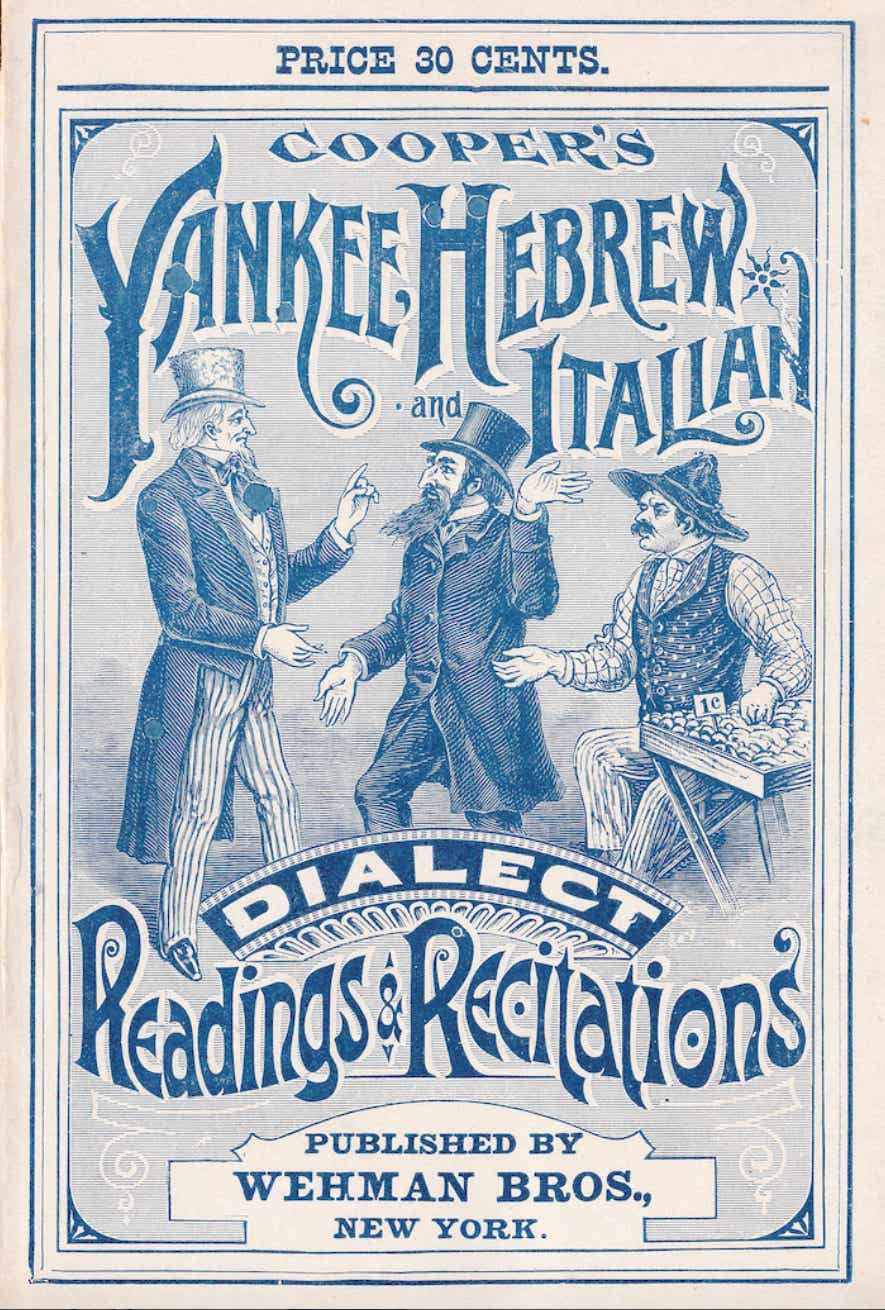
Cooper’s Yankee, Hebrew and Italian Dialect Readings and Recitations. New York: Wehman Bros., 1891. YIVO Archives.
Jewface in Print and on Stage
Remember that fun term I casually used in the previous section? Jewface was the Jewish equivalent to ‘blackface,’ and was used as a form of entertainment in the early 20th century. Gentiles began using it in 1880s and it was taken over by Jewish immigrant actors to portray Greenhorns, or newly arrived immigrants.
This form of comedy allowed them to critique their own identities and the stereotypes imposed on them. Think of Mel Brooks in Blazing Saddles, who used caricature to point out the absurdity of prejudice.
At the time, Jews were understanding where they fit into American society, as they were seen as white-passing but still “the other,” with barriers put up to fully prevent them from integration.
Some Jews got a kick out of Jewface, but it didn’t sit well with everyone. Reform rabbis, who were all about assimilating and leaving behind the ways of the Old World, were not fans.
More Jokes!
We could talk about Yiddishisms and Betty Boop, but you’re going to have to take the class to hear about that. Here’s some jokes, though:
There’s a sign on a church that says “Convert and we’ll give you $20.” Two jews are standing outside looking at the sign. One decides to go in and convert. When he comes out, the other guy says to him, “Did you do it? Did you convert? Did you get the money?” The other replies, “You people are always about money.”
A Jew gets hit by a car outside a church. The priest comes out and asks him, “Do you believe in the father, the son, and the holy ghost?” And the Jew says, “I’m dying and he asks me riddles!”
One night, a poor boy went to see a rich businessman, looking for a donation. “What is the meaning of this, coming to my house at night?” demanded the businessman angrily. “I beg your pardon,” the boy answered, “I do this during the day, too.”
Jewish Jokes with Fred
Jumping ahead in time a bit… during Covid, I made Zoom videos with my (then) 90-year-old dad, who you just read about in last week’s Drop! Here’s the last video in the installment. Enjoy!
Gut Shabbes,

💦 Similar Drops
Kosher Duck Revolution is an initiative of AIC. Join AIC. Membership starts at $9 a month.