🎤🎵Hallelujah! Israeli history through Eurovision wins

Originally published on The Shabbat Drop by Miranda Lapides on May 17, 2024.
This week has been emotional, heavy, intense, and delicious, starting with Yom HaZikaron, Israel’s Memorial Day for fallen soldiers and victims of terror, and then transitioning to Yom Ha’atzmaut, Israel’s celebratory Independence Day.
Personally, my week began with hearing a heartfelt speech by Nissim Louk, Shani Louk’s father, who found out his 22-year-old daughter was murdered on October 7th by seeing a photograph of her body facedown on the back of a Hamas terrorist-driven pickup truck.
I then visited the Nova Exhibit, a memorial dedicated to the 400+ festivalgoers, including Shani Louk, who were killed and kidnapped on that dark day. Seeing the footage of terrorists hunting down Jews and people who didn’t know if they were going to make it out alive, and their belongings from the festival displayed before me, was a sobering experience reminiscent of a Holocaust museum. I promise this Drop gets uplifting and fun - keep reading.
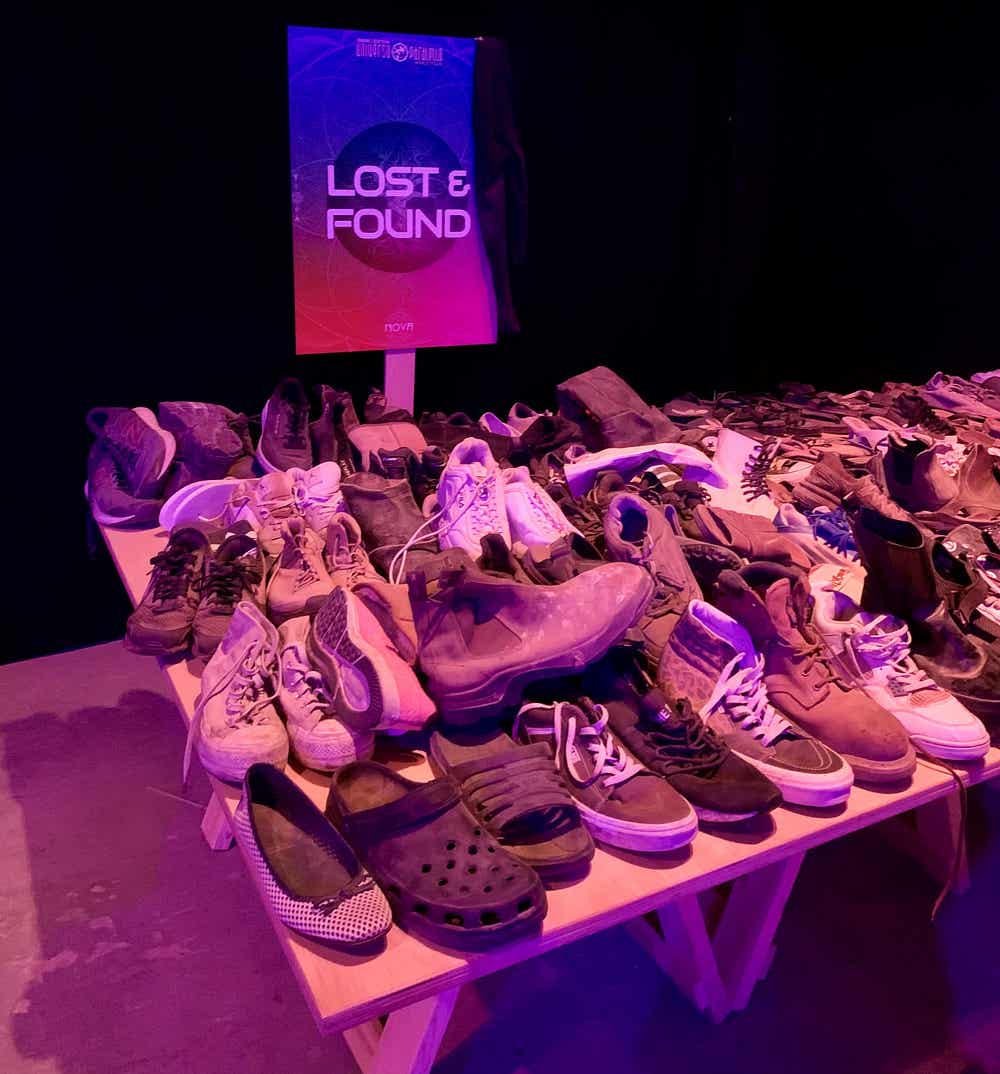
Shoes found at the site of the 10/7 Nova massacre, where 400+ people were murdered and kidnapped. Last week, a freed hostage found her shoes here.
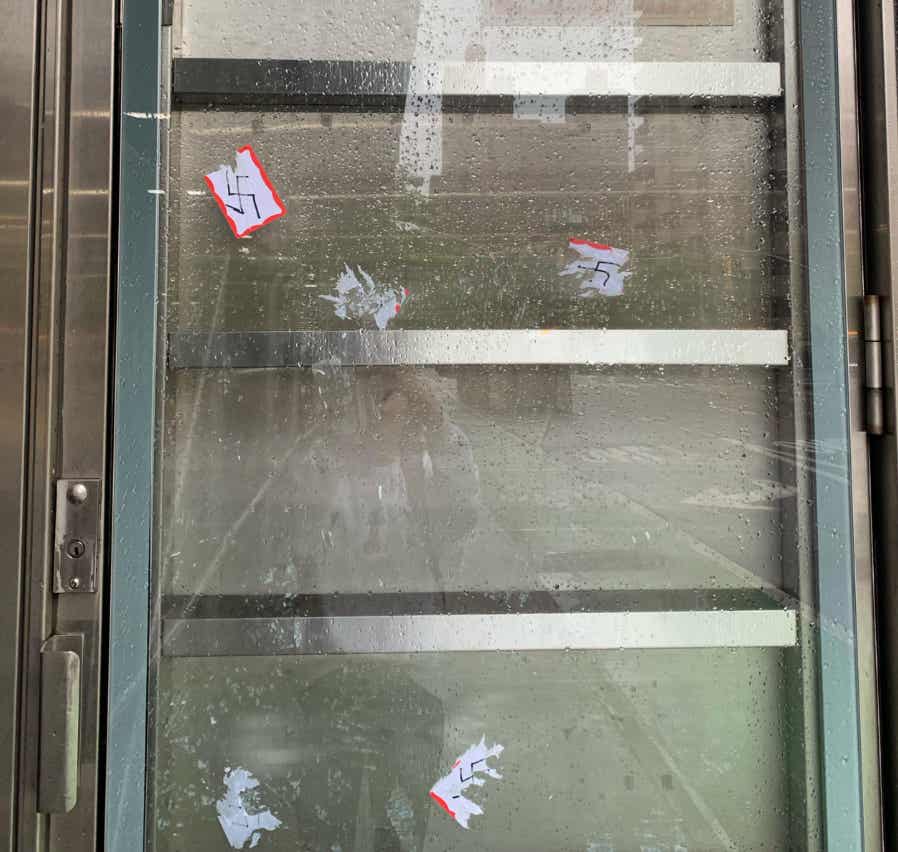
I also saw swastikas posted in my neighborhood, which I took down and reported to the police. I always wondered when that inevitable moment would come, and it finally happened. “But New York is full of Jews!” someone once said to me. It’s full of Jews wondering when they should pack their bags and leave. I’m not going anywhere; the pizza is too tasty here.
The week’s mood shifted with an Israeli BBQ and a study of Eden Golan’s Eurovision song lyrics to “Hurricane.” As a member of the European Broadcasting Union, Israel has been competing in the song contest since 1973, has won four times! So let’s change the mood even more by looking at Israeli history through its four winning Eurovision songs. Yalla!
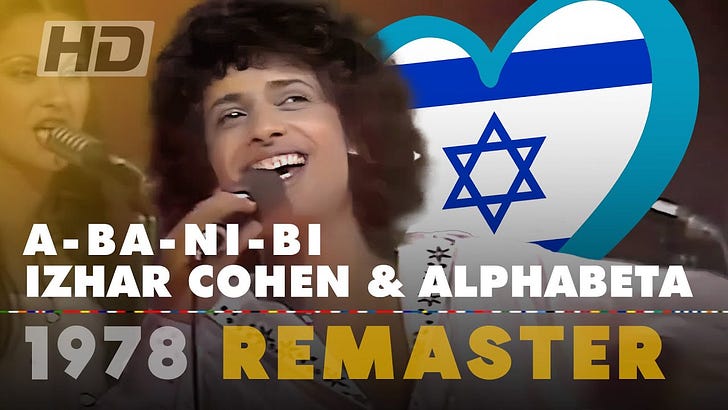
1978: “A-Ba-Ni-Bi” by Izhar Cohen and the Alphabeta
In 1978, Israel was relatively young, celebrating its 30th year of independence. The nation was still in the aftermath of the 1973 Yom Kippur War, a conflict that left deep scars but also showcased the resilience and unity of the Israeli people. Maybe that’s why “A-Ba-Ni-Bi” (“I” in bet language, read further for clarification) brought much-needed joy and pride. The playful, sweet song about the secret language of love captured the imagination of Europe and secured Israel’s first-ever Eurovision win.
The victory allowed Israel to be seen in a different light, one of cultural richness and creativity rather than just political conflict. The song’s playful and joyous nature resonated with audiences, providing a refreshing contrast to the usual news about the Middle East. This victory helped humanize Israel, and was a celebration of life, love, and the vibrancy of Israeli society.
Backlash
Some Arab countries broadcasting the contest, like Jordan and Lebanon, cut the transmission when it became clear that Israel had won. Jordan went so far as to declare that Belgium, which finished second, was the winner.
A look at the lyrics
The title means “I” in a Hebrew sort of pig latin, where a different form of the syllable “ba” is inserted after each consonant in the original word, so I love you “Ani ohev otach” becomes “A-ba-ni-bi o-be-hev o-ta-bach.”
Ahava hi mila yaffa Hi tfila yafa, hi safa Ahava hi elai tova Hi tamid titgaber Ubisfat ahava nedaber
Love is a beautiful word It’s a wondrous prayer, it’s a language Love is good to me It will always overcome And we shall speak in a language of love
1979: “Hallelujah” by Gali Atari and Milk and Honey
Hallelujah, indeed! Yes, Israel won two years in a row. This victory coincided with the signing of the historic Egypt-Israel Peace Treaty, a groundbreaking event that followed the Camp David Accords of 1978. The song’s heartfelt and hopeful message resonated deeply with the spirit of the times, embodying the optimism of a new era of peace and cooperation in the Middle East. If only we could go back to this time, minus those dorky dance moves.
“Hallelujah” became an anthem of hope, not just for Israelis but for people around the world yearning for peace. The song’s success at Eurovision was a reaffirmation of Israel’s cultural and musical talent, as well as its enduring spirit against the challenges of its geopolitical landscape, reinforcing the idea that Israel was not just a nation embroiled in conflict but also a place striving for coexistence.
I love this comment on the YouTube video: “About 12 years ago, I was DJing at a foreign-language student disco in a cellar club in the little town in Germany where I live. Lots of Eurovision stuff. What we didn’t realize was that a group of Israeli students were drinking on the floor above. I closed the disco with this song, and suddenly the Israelis, who heard the opening chords, came running down the stairs to join in the dancing to this gorgeous song. Somehow that moment summed up what Eurovision was all about - music bringing together people from different cultures. It makes me sentimental to think of it now, but it was a beautiful moment I will never forget.”
A look at the lyrics
“Hallelujah” originates from the Hebrew phrase “hallelu Yah,” which combines “hallelu,” meaning “praise,” and “Yah,” a shortened form of “Yahweh,” the Hebrew name for G-d.
Haleluya im hashir, haleluya al yom sheme’ir, Haleluya al ma shehayah, umah she’od lo hayah, haleluya
Hallelujah with the song, Hallelujah for a day that shines For all that has been and for all that is about to happen, hallelujah
1998: “Diva” by Dana International
The 1998 win with “Diva” was groundbreaking for several reasons. The victory of Dana International, a transgender woman, was a powerful statement of diversity, inclusion, and the progressive spirit of Israeli society.
The late 90s were a period of hope and transition for Israel. The Oslo Accords had been signed in the early part of the decade, and there was cautious optimism about the peace process with the Palestinians. Dana’s victory was symbolic of breaking barriers and challenging norms, reflecting a society that was embracing change and pushing the boundaries of traditional values.
Backlash
Some conservative and religious groups within Israel expressed disapproval of Dana International’s participation due to her being a transgender woman. This sparked debates about gender identity and LGBTQ+ rights within Israeli society.
A look at the lyrics
Yesh isha Gdola meha’haim Yesh hoshim sheyesh rak la Yesh ksamim Veyesh yamim kashim Ubama she’he kula shela
There is a woman who is bigger than life She has senses nobody else has There is magic, and there are hard days And a stage which is all hers
2018: “Toy” by Netta
You can really see (and hear) how music and style have changed since 1998, with Netta’s “Toy,” an electronic nightmare that forever haunts my ears. The song, with its quirky beat and powerful message of self-empowerment, resonated with the #MeToo movement that was sweeping the globe. Netta’s performance was not just entertaining (to some) but was also a bold statement against bullying and gender inequality.
This period in Israel’s history was marked by technological innovation and economic growth. Tel Aviv was emerging as a global tech hub, and the country was forging new diplomatic relationships with some Arab nations.
Backlash
Pro-Palestinian groups called for protests and boycotts after Netta’s win, particularly in the lead-up to the 2019 contest held in Tel Aviv that following year (the contest is held in the winning country that following year). Many pro-Palestinian activists and organizations called for a boycott, arguing that the contest was being used to “whitewash” Israel’s policies regarding Palestinians, when they should have been boycotting purely because the song is so bad.
A look at the lyrics
Wonder Woman don’t you ever forget You’re divine and he’s about to regret He’s a bucka-mhm-buckbuckbuck-mhm boy Bucka-mhm-buckbuckbuck I’m not your bucka-mhm-buck-mhm-buck-mhm
I’m not your toy (not your toy) You stupid boy (stupid boy) I’ll take you down now, make you watch me Dancing with my dolls on the motha-bucka beat Not your toy (cululoo, cululoo) (Cululoo, cululoo)
Doesn’t reading this make you feel like you’re losing your mind a bit?
2024: A Time of Resilience
Even though Eden Golan didn’t win with her song “Hurricane” (originally titled “October Rain”), the context of her participation was significant. As Israel is still embroiled in a war in Gaza, with 132 hostages still there, and still reeling from October 7th, Eden was faced with public protests, threats, and bullying from other contestants. Because of this, she had to stay in her hotel room the entire week. Maybe we’re not so “united by music” as Eurovision’s motto suggests.
Despite these hardships, Eden’s performance, song, and composure were a testament to Israeli resilience in the face of adversity. Israel also had the second largest number of public votes, the most public votes from 14 countries, including the “rest of the world” vote, and placed 5th overall. Eden’s participation in the contest was the cheer we needed during a dark time.
A look at the lyrics
Someone stole the moon tonight Took my light Everything is black and white Who’s the fool who told you boys don’t cry?
Reflecting on Israel’s Eurovision wins and this year, these moments capture the essence of different eras in Israeli history, from the celebration of independence and peace to the embrace of diversity and resilience in the face of conflict. Is Israel only favored when there are attempts for peace? By that logic, Eddie Butler would have won in 2006 after the withdrawal from Gaza. Let’s hope for peace – and another victory on all fronts – soon!
Shabbat Shalom! With love and pop music,

Kosher Duck Revolution is an initiative of AIC. Join AIC. Membership starts at $9 a month.