

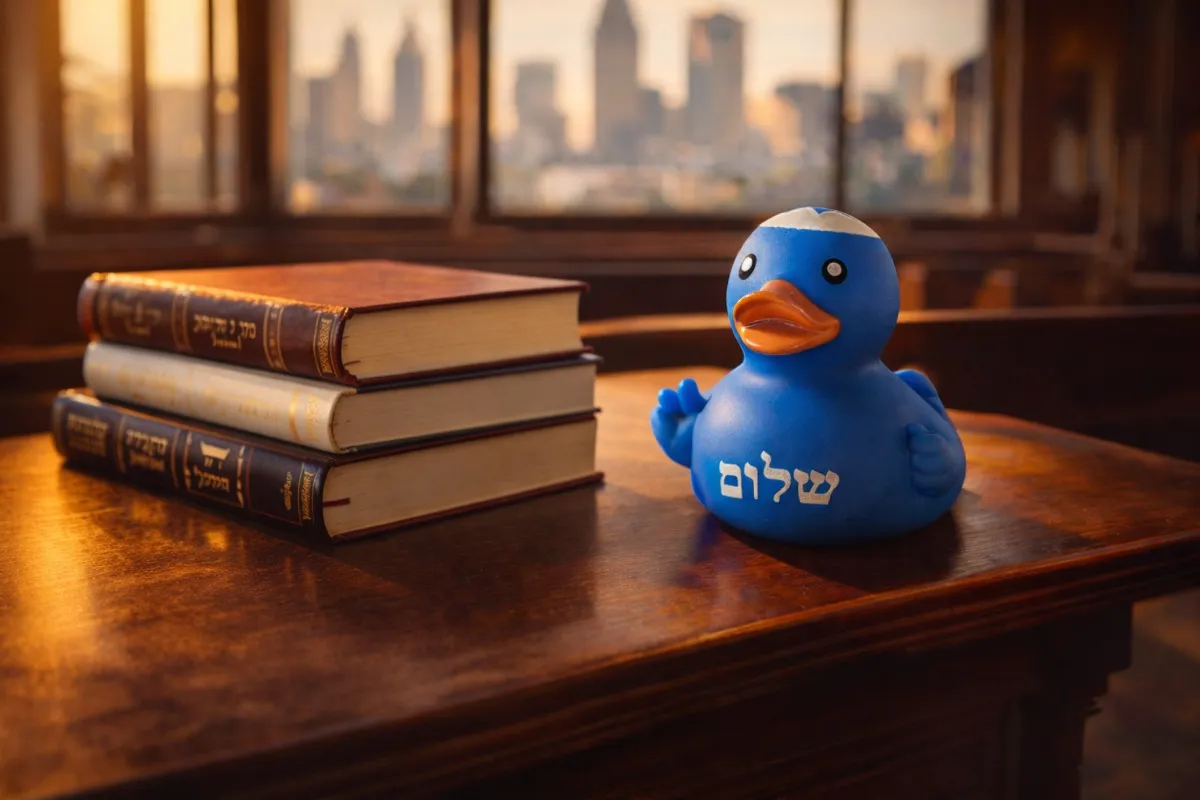
He Asked for a Sip
Yesterday I recorded a podcast with Eyal Dror. He’s a reserve lieutenant colonel who lives on Kibbutz Dafna, right up against the Lebanese border. It was late at night for him, and he was on his phone because the internet up there can’t hold a laptop call. I told him not to worry about it. My power had gone out in the middle of another recording the day before.
Dror set up and ran Operation Good Neighbor. In 2016, with Syria’s civil war right on the other side of the fence on the Golan, the IDF started bringing sick Syrian kids across to Israeli hospitals. About 1,400 of them by the end, and thousands of wounded adults too. Then flour, baby formula, medicine, diesel, a clinic, and a maternity hospital on the Syrian side. These kids had been told their whole lives that Israel was the enemy. He described playing soccer with an eight-year-old boy, the kid at one end of a field and him at the other, a lieutenant colonel in uniform with a heavy gun, the two of them shouting at each other in Arabic over who was winning.
Early on, the Syrian government hit a field clinic in one of the villages. The man on the other side hadn’t called and hadn’t asked for anything, and they barely knew each other yet. Dror got the message very late at night, after two nights at the border without sleep, and he thought what you’d think: a couple of hours in bed, deal with it in the morning. A minute later he changed his mind. They only worked at night, so waiting for morning meant forty-eight hours, and forty-eight hours in Syria, he told me, is a generation. The equipment for a whole new clinic went across. The man phoned him the next morning. He said he hadn’t even had the courage to ask. “Ask me what you want,” he said. “I will do that.”
A Muslim organization in the States sent over a container of secondhand clothes, about thirteen tons of it. Dror’s people unloaded it by hand in the rain, put it on a truck, drove it to the border, and unloaded it again. The next morning the organization’s CEO called to say that nine hundred bags had reached the other side. Dror couldn’t work out what the problem was. “You don’t understand,” the man told him. “You gave them exactly the number of bags that we provided. You didn’t even take one for yourself.” When they’d sent aid through other countries, half of it never arrived.
So Dror had been tested, and he hadn’t known it.
This Shabbat we read Chayei Sarah. Avraham sends his servant to find a wife for Yitzchak, and the servant gets to a well with ten camels and a test of his own. Last year this column stayed on the end of that story, Rivka’s one word, elech, I will go. Back up a few verses.
Rashi says the servant ran to her because he saw the water in the well rise up as she came near. So he’s just watched a miracle, and it doesn’t settle anything for him. He wants to see what she does with a jar. All he asks for is a sip, which is Rashi’s word for it too. “Please, let me sip a little water from your jar.” She tells him to drink, she hurries to lower it, and then:
וַתְּכַ֖ל לְהַשְׁקֹת֑וֹ וַתֹּ֗אמֶר גַּ֤ם לִגְמַלֶּ֙יךָ֙ אֶשְׁאָ֔ב עַ֥ד אִם־כִּלּ֖וּ לִשְׁתֹּֽת׃
When she had let him drink his fill, she said, “I will also draw for your camels, until they finish drinking.”
That’s exactly the sign he’d prayed for. But he prayed it in his heart, so she has no idea. As far as she knows, a stranger asked for a sip and she’s just signed up to haul water for ten camels, one jar at a time. A camel coming in off a long road does not take merely a sip. The Torah has her hurrying, emptying the jar into the trough, and running back to the well, and she keeps at it until all of them are done.
And what’s he doing all this time?
וְהָאִ֥ישׁ מִשְׁתָּאֵ֖ה לָ֑הּ מַחֲרִ֕ישׁ לָדַ֗עַת הַֽהִצְלִ֧יחַ יְהֹוָ֛ה דַּרְכּ֖וֹ אִם־לֹֽא׃
The man, meanwhile, stood gazing at her, silently wondering whether GOD had made his errand successful or not.
Standing there. The Torah doesn’t mention him lifting a jar. The word JPS gives as “gazing” is mishta’eh, and Rashi says it comes from a word for desolate, the one Yeshayahu uses for a ruined city. Here it’s a man who’s gone blank, deep in thought. In Bereshit Rabbah, Rabbi Yochanan of Tzippori says he was squinting at her.
He’s counting bags.
The gold doesn’t come out until the next verse, “when the camels had finished drinking,” and not a minute before.
“This is how you build trust,” Dror told me. “By actions.” People today love to talk, he said, to sign papers, to make ceremonies.
He told me about a nine-year-old girl, too. The doctors said she wouldn’t have lived another twenty-four hours, and she spent six months in an Israeli hospital. Before she went home she took a sheet of paper and some pencils and drew the flag of Israel, Star of David and all. Above it, in Arabic, she wrote her name, a heart, and Abu Ya’aqub, Father of Jacob, which was his name on the Syrian side. It’s still in his office.
We get to Yaakov next week. His mother is the girl at the well.
My husband and I spent the summer in Kiryat Shmona, which by Dror’s count is about eight minutes from him. So before we’d even started recording, he told me that next time we’re in Israel we’re most welcome. A beer, he said, a coffee, a whiskey, a barbecue. And if I turned out to be a vegetarian, “we will do others.”
I’d only asked him for an hour or so to share his story with you. Instead he gave me so much more.
Shabbat shalom.
— Uriel ben Avraham
Kosher Duck Revolution is an initiative of AIC. Join AIC. Membership starts at $9 a month.