Sometimes a prayer can look like this,

Originally published on The Shabbat Drop by Miranda Lapides on April 17, 2026.
Hebrew Word of the Week: Keys are maftechot (מַפְתְּחוֹת), because I thought I lost my keys this week (I didn’t, I just left them at home), and then my app randomly taught me the word for keys. 🔑
This Drop is for anyone spiritual, struggling with spirituality, or into yoga and/or poetry! Or if you’re like me, struggling with all of the above.
I’ve been trying to pray more. For months, I’ve been reciting the Modeh Ani (okay, more like I mumble it to myself) as soon as I wake up. Lately, I’ve been reciting more morning prayers and have been studying Shabbat service prayers with my chevruta, or learning partner.
However, it’s hard to pray when you don’t know the purpose or origin of the prayer, you don’t have time, or the words just aren’t speaking to you. Sometimes I start off strong with my morning prayers, energized and focused, and then cut it short because I have to get started with my day, like today. Or I breeze through a prayer because I can’t connect to it when I don’t understand why Jews recite it.
I could write a whole Drop on this, but wanted to share, because I connected with another Jewish Substacker who wrote a creative poem on this topic.
Corie Feiner is a Jewish yogi and poet, who is on a mission to write 108 poems, each corresponding to a different yoga pose! She’s at 107 now, so clearly she doesn’t struggle. Or does she? Her poem, “High Lunge Prayer Twist,” (below) depicts prayer as a messy endeavor, an experience of resistance between your body and heart.
I am continuously inspired by the myriad ways people connect to their Jewish practice, and I hope Corie’s poems and journey touch your soul in some way.
The following is from Corie:
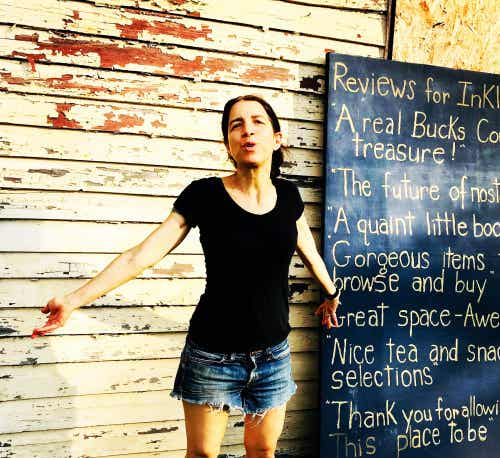
I started writing my yoga poems during a profoundly moving yoga practice where at the end I sat up, picked up my journal, and wrote my first poem for Hero Pose.
What does it mean to be a hero?
To kneel on any piece of floor you can find, your knees pressed together, your feet apart, your big toes reaching towards each other in stillness and longing?
A few days later, I wrote a poem for Warrior I.
…I raise my arms above my head as if I were reaching to grab swords from the sky like a mythic hero born of my wild hair hoping
that if I killed everything around me I would no longer feel any pain.
After the third and fourth poems came, I realized that each pose was inspiring me to write poems the way that dance inspired Degas to paint. Each movement is rich with Hindu tradition and mythology, yogic philosophy, physical challenges, spiritual potential, and the somatic release of old stories held in my body. Yoga also has Jewish connections, like the many stories we carry, honoring our bodies, and the breath.
Although I was new to yoga as a practice, I was not new to writing. I had been writing poems since I was nine years old when my then best friend gave me a velvety black writing journal for my birthday. This small gesture led to me writing regularly and served as a safe space for a very sensitive soul navigating the rawness of 1980s New York. I spent my lunch breaks writing with my high school’s poetry group, Poets House, reading, writing, and feeling at peace between the shelves of hundreds of poetry books.
I decided to dedicate myself to somehow making poetry my life and my living. After I studied poetry at the University of Pittsburgh and pursued my MFA at NYU, I spent many years as a full-time poet-in-the-schools, workshop facilitator, performer, and adjunct college professor. As a lover of spoken word poetry, I was part of the vibrant NYC slam scene and started a bunch of poetry reading series. I was also active in the thriving Jewish arts scene and was a cast member of Storahtelling as well as an artist in residence at the 92nd Street Y/MAKOR, back when it was a thing.
After I got married to my soulmate, we moved to a small historic town by the Delaware River in Pennsylvania, where I became the Poet Laureate of Bucks County, but mostly dedicated my time to becoming a home birthing, homeschooling, cook-from-scratch sort of mom to my two boys.
My current project, A Poem for Every Pose, integrates my love of yoga with poetry.
Currently, I have 107 yoga poems out of 108 and will soon be ready to publish this collection. My vision for these poems is for them to be read before, during, or after yoga practices to help us align our minds, bodies, and souls and bring us to a place of self-love, presence, and healing.
You know how Miriam played the tambourine in the desert as we fled Egypt? That is the purpose of these poems—to be the songs that keep us going as we move through these tumultuous and possibly transformative times.
The two poems I am sharing with you here are “Reverse Tabletop,” and “High Lunge Prayer Twist.” Each one, in its own way, has its own deeply Jewish DNA with subtle and not-so-subtle references to prayer.
Wherever you are at in your Jewish or spiritual journeys, I hope these poems serve you well and help you feel something deeper. And if you are called to subscribe to my Substack, I would love to have you as part of my community where we talk about yoga, poetry, and the body in a down-to-earth sort of way. We’ve also been doing Rosh Chodesh yoga for the new moon on Substack live!
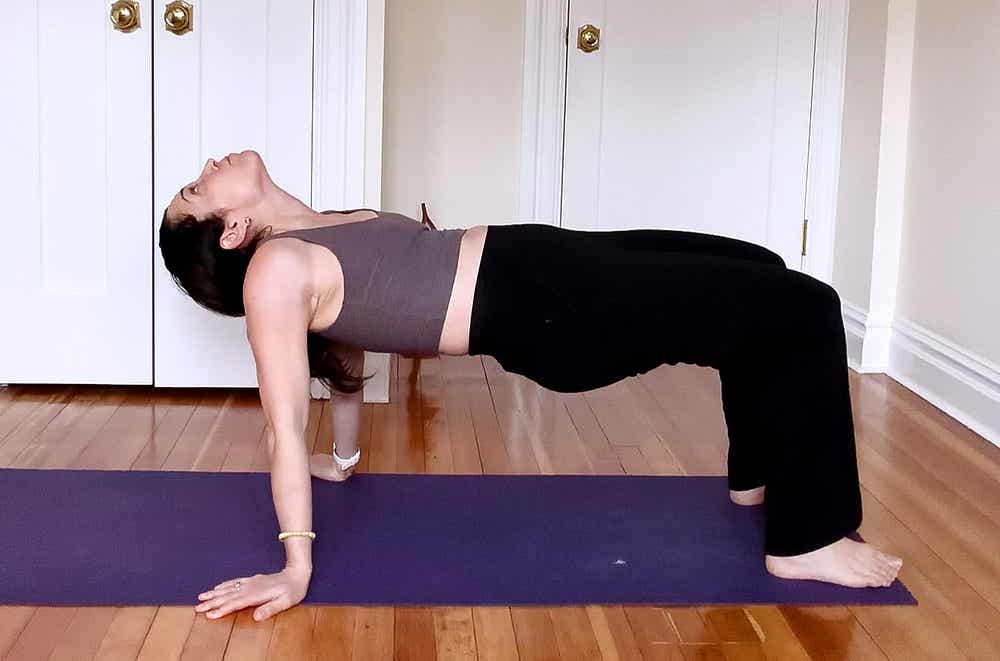
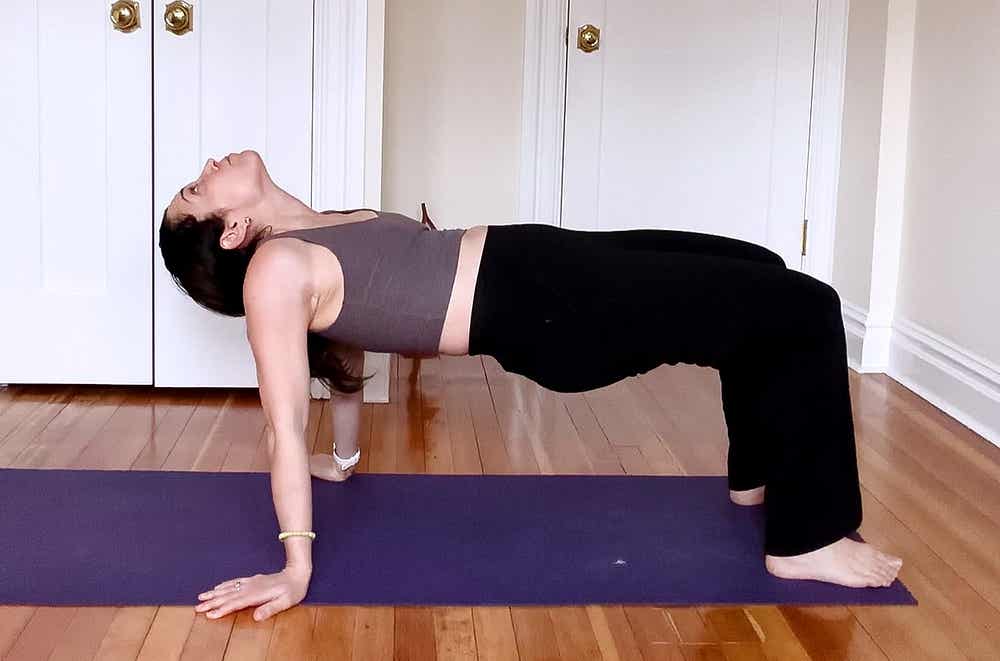
Sara Pam Neufeld of The Overwhelmed Yogi practicing Reverse Tabletop.
“Reverse Tabletop”
This poem was inspired by the Shehechiyanu prayer, which is what we say when we experience something for the first time, to realize the miracle of the present moment.
To the lift, to the knees, to the back to the throat, to the head, to the neck, to the hard wood, to the clang of glass, to the knock of knives, to the water, to the wine and strength it takes to hold all my weight like this.
To the hips, to the core, to the nicks, to the scrapes, to the stretch, to the aches, to the meals, to the grace, to the long spine, to the answered prayers, to the shoulder’s shake, to lifting the goblet of my heart into the air and to toasting that I have made it to this very moment, this very breath, this very day.
Sanskrit Name: Ardha Purvottanasana
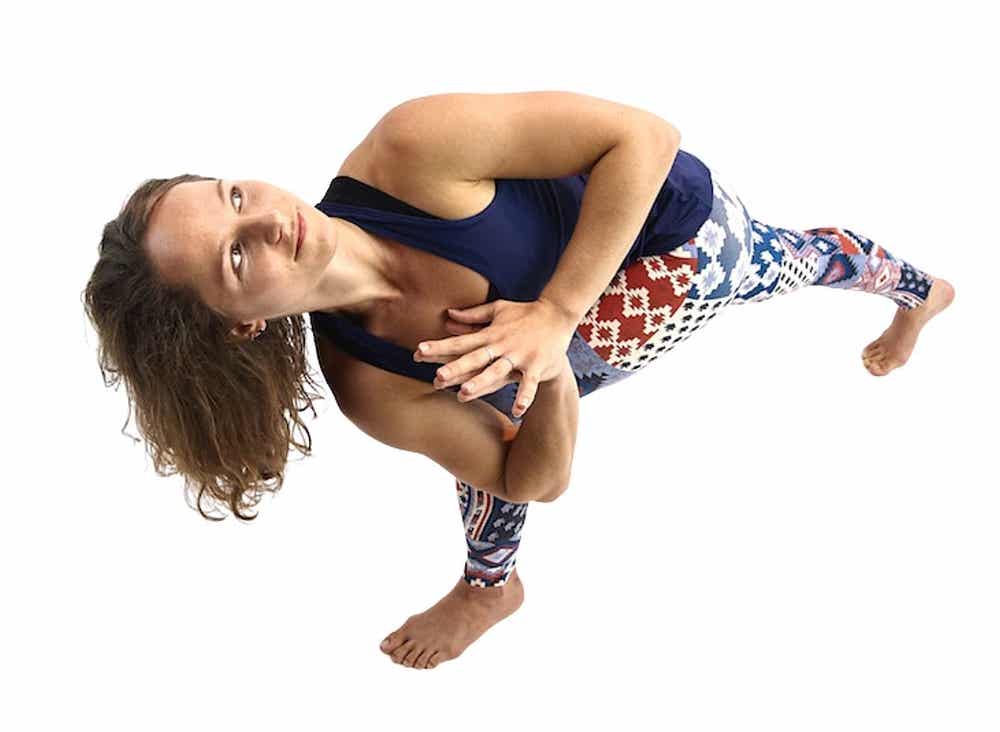
“High Lunge Prayer Twist”
To know high lunge twist is to know that sometimes a prayer can look like this, your whole body quivering quietly,
your gaze not quite towards heaven, but sideways, backwards towards the ache of your past and the small triumph
of just being here, right now. Sometimes your palms will not be able to rest against your beating heart, but that does not mean
that your prayers will not be heard, the soles of your feet holding themselves in place, your hips hugging the bowl
of your belly filled with breath, your elbows like the edges of pointed stars telling you what it is like to hold so many wishes,
to create your own light and to know that you will never truly fall.
Sanskrit Name: Parivrtta Ashta Chandrasana
Shabbat Shalom and happy writing, praying, or posing (or all three!),

💦 Like prayer or poetry? Check out these Drops:
Kosher Duck Revolution is an initiative of AIC. Join AIC. Membership starts at $9 a month.