

The Best We Could Do
Sunday we went down to Jerusalem to have coffee with a friend. The coffee ran about two hours, which was longer than expected but very Israeli. And partway through it somebody else the three of us knew walked into the same Aroma, saw us, and pulled up a chair for a while. Both of our friends (whom you likely, at least, know of) spend their time and energy, day in and day out, working to make Israel, and the Jewish People, better. They’re very good at it. You come away from a morning like that raring to take on the world.
Afterward we went to the City of David and spent three hours touring it, most of that time underground.
A great deal of that tour is what people did regarding water. More than you’d think, to be honest. The spring sits at the bottom of the slope. They built fortifications around it as a defense measure, but when the neighbors turn hostile — and if you know anything of this region, that’s inevitable — it is rather outside any wall you could reasonably build. So they cut through the hill to move where it collects. We walked through that tunnel — which took some half an hour or so. The tunnel is narrow enough that your shoulders touch both walls in places. It bends in ways that make no engineering sense until someone explains them to you, and there is water you have to walk through the whole way. Up to about 70 cm in some places. Half a kilometer of it, cut by hand with axes and picks, by two crews starting at opposite ends and working toward each other through solid rock until they met in the middle. Hezekiah’s men finished it ahead of the Assyrian army’s arrival, somewhere around 701 BCE. On the same slope there is older waterworks still, roughly a thousand years older.
You come up out of it into the light with a lot of respect for the eighth century BCE.
This week’s parsha is Eikev, and Moshe is on the far side of the Jordan describing the country the people are about to walk into. He goes through the wheat and the barley, the vines and the figs, the iron in the stones. Then he gets to the water.
וְהָאָ֗רֶץ אֲשֶׁ֨ר אַתֶּ֜ם עֹבְרִ֥ים שָׁ֙מָּה֙ לְרִשְׁתָּ֔הּ אֶ֥רֶץ הָרִ֖ים וּבְקָעֹ֑ת לִמְטַ֥ר הַשָּׁמַ֖יִם תִּשְׁתֶּה־מָּֽיִם׃
but the land you are about to cross into and possess, a land of hills and valleys, soaks up its water from the rains of heaven.
Egypt they understood. Egypt was the Nile and a network of ditches. You’d get up in the morning and haul water and open the channels. The irrigation would bring up the crops due to your hard work. Rashi reads this and says in Egypt you had to rise from your sleep and toil, and in this land you may sleep in your bed while the Holy One waters the high ground and the low ground together. Moshe is describing a country where nobody controls the water, and he is rightly selling it as the better deal.
Standing in Hezekiah’s tunnel with cold water in my shoes, I finally understood what he was selling. That tunnel is impressive. What it amounts to is moving one spring a few hundred meters sideways. It took a king, a national emergency, an entire kingdom’s treasury, and two crews of men swinging picks in the dark for months. That was the best we could do. Every winter, with HaShem’s command, the sky does the Galilee and the Shomron and the coastal plain, for free, without a committee.
The next paragraph is the second paragraph of the Shema, the one Jews say morning and evening. The Shema’s opening paragraph speaks to one person — you shall love, with all your heart, with all your soul, singular the whole way down. Here it goes plural.
וְנָתַתִּ֧י מְטַֽר־אַרְצְכֶ֛ם בְּעִתּ֖וֹ יוֹרֶ֣ה וּמַלְק֑וֹשׁ
I will grant the rain for your land in season, the early rain and the late.
Artzechem. Your land, all of you. Rain comes down on a whole valley at once, and the water standing on any one man’s field is weather that belonged to everybody on the slope. He can keep his own ground in perfect order and still spend the winter in the dust if there is no blessing. There is no version of this where you farm alone. A tunnel one king can build. A rainy season takes a people.
Which is roughly what the rest of my week looked like. Wednesday we sat down to lunch with a friend and got up hours later. Yesterday we were at the opening of The Israel Guys’ new facility, and ran into people we already knew. Truly it seems you cannot get through an afternoon in this country without someone from another part of your life walking into the room. I wrote Letters Across the Table to people like the ones in that room before I had properly heard of any of them. You write to a room you have never been in, and then one day you are standing in it, eating something off a folding table, shaking hands, having a glass of wine — wine, I might add, which was helped by the amazing people The Israel Guys bring here to volunteer for weeks on end toiling in the fields to bless the land and the people of Israel.
Not one of them can make it rain. Though, through irrigation and desalination, they can come close. But even that is through the blessing of HaShem. That is the point of the verse. What they can do is be the plural the promise is addressed to, and they are doing it, day after day, mostly without an audience.
This morning we have cleaned the house, done the laundry, made our trip to the butcher and the baker. (We already have candles, so no need to complete the nursery rhyme.) The only thing left is the cooking, which it is still much too early to start. Nothing has fallen out of the sky here since spring and nothing will until well after the chagim. The valley is brown. The ground has gone pale and started to crack. In a few hours the light will change, the candles go on the table, and the whole country will stop at once. In the meantime I am sitting here with a cup of coffee, in a land that cannot water itself, feeling unreasonably good about the company.
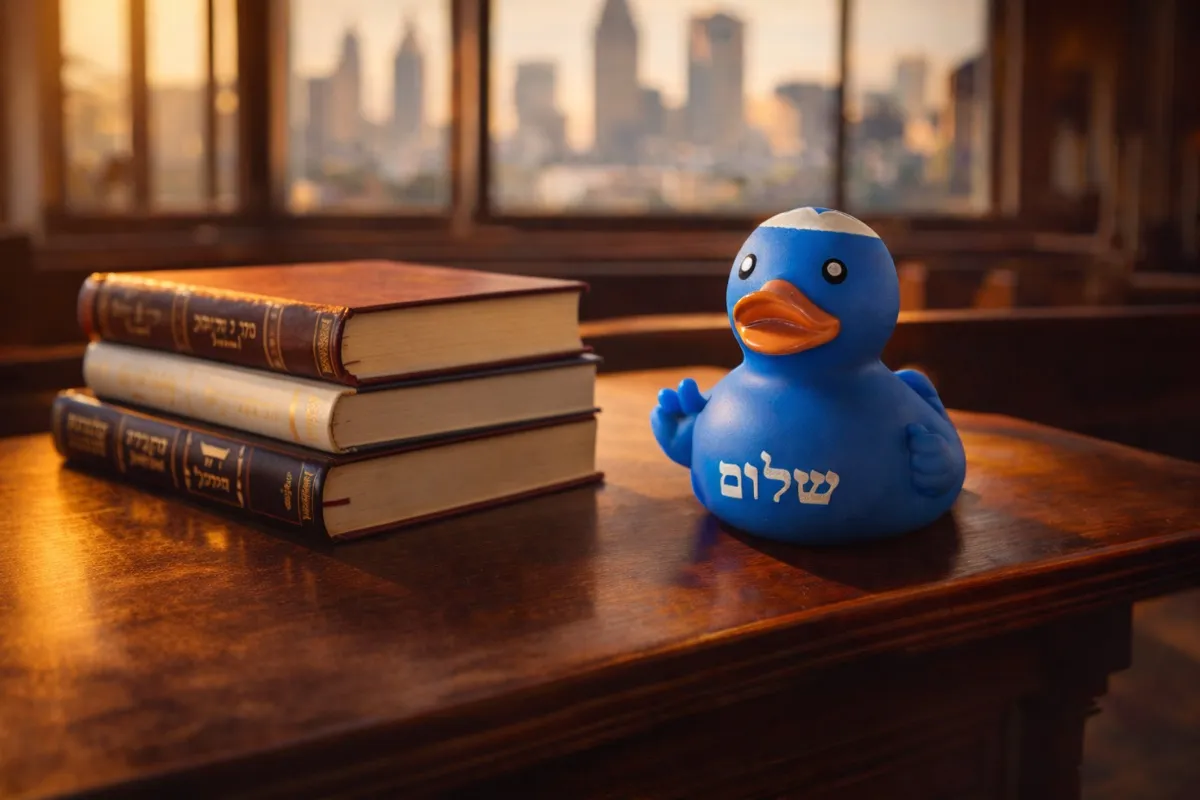
Shabbat shalom.
— Uriel ben Avraham
Kosher Duck Revolution is an initiative of AIC. Join AIC. Membership starts at $9 a month.