

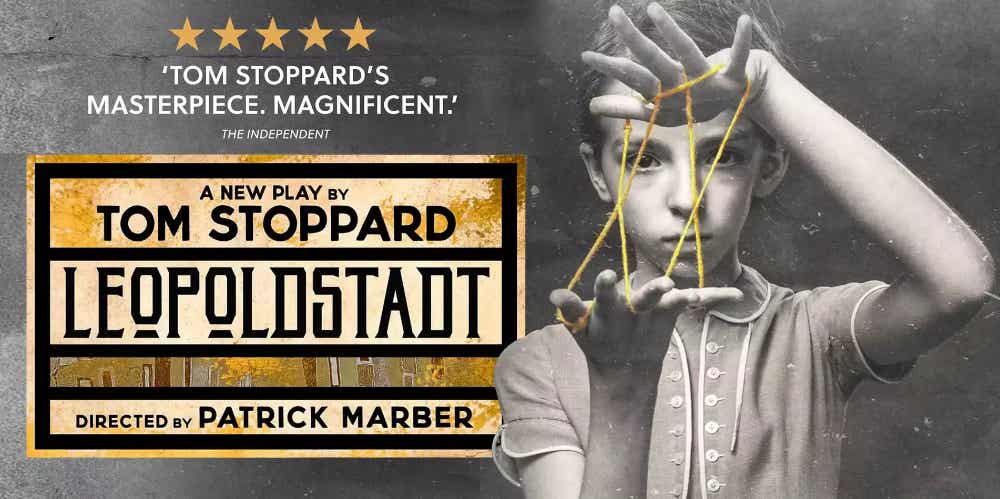
Two Ladies in Leopoldstadt

Originally published on The Shabbat Drop by Miranda Lapides on November 11, 2022.
Last weekend, my mom and I saw the new Broadway play “Leopoldstadt,” a heavy but thought-provoking Jewish play by British playwright Tom Stoppard.
I went into the Longacre Theatre not knowing anything about it other than it’s about generations of an Austrian Jewish family. I prefer to go into Broadway plays this way - I never understood people who listen to the Hamilton soundtrack before seeing it - but this was the first time I wished I did a little research before seeing something.
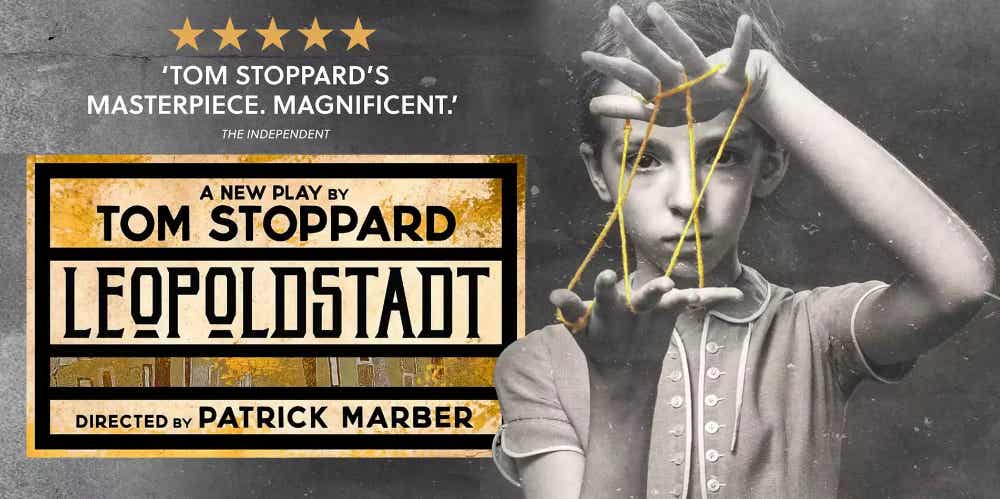
Had I done my research, I would have known the play is semi-autobiographical, as Tom Stoppard (who I had never heard of before) found out later in life he is a Czech Jew. I would have understood the personal connection behind the play’s overall themes of Jewish identity and survivor’s grief.
I also would have known the play is named after the Jewish quarter in Vienna. It wasn’t clear and wasn’t made known in the play, nor did the family live there. It wasn’t until my post-play research that I learned what Leopoldstadt was, and that I had been pronouncing it wrong! (“What play are you seeing?” “Leopold’s dad!”)
Even though the family didn’t live there, this connection makes sense, as one of the main character’s names is Leopold, a nod to his ancestral connection. I also learned the original Jewish sector was named after King Leopold, the Roman emperor who expelled Austria’s Jews in 1670.
What is Leopoldstadt now? Like most European Jewish parts of town, they were extinguished by the Nazis and are no longer major thriving Jewish communities, but nevertheless historical, complete with synagogues, kosher restaurants, a Jewish museum, and a Holocaust memorial. I’ve never been though, so you’re going to have to do your own research.
Back to the play! It follows this family through time, starting in 1899, and jumping to 1900, 1924, 1938, and 1955. One could guess what happened during some of these pivotal years.
It was hard to follow at times, with many main characters, some Jewish and non-Jewish. Had I done more research, I also would have known some of the characters were baptized to assimilate. I didn’t know about that in history; I only ever heard of the conversos, Jews forced to convert during the Inquisition.
So one of the main themes was assimilation. Another theme was Zionism in the early days of Theodor Herzl and talks of forming a Jewish state, which was a new concept in the late 19th century, though Jewish connection to the land of Israel was not new. That is why one of the best parts in the play is an emotional conversation between two characters: one who was baptized, and a Jew who is a fervent Zionist, believing in the need for safety in a Jewish homeland, to which the assimilated, baptized Jew replies naively something like: “We don’t need that! Jews are thriving in society here just fine!” (I don’t remember exactly - the dialogue was fast but the acting and writing was phenomenal, and I’d see the play again for these powerful five minutes.)
I won’t spoil the symbolism of cat’s cradle throughout the play, but it was subtly clever and reminded me of my childhood. New party trick: make a Star of David in cat’s cradle to impress all your friends.
Another great element was the use of mixed media, with a screen projecting images of old Austria and Jewish families, and at one point Mr. Herzl himself!
Would I recommend this play? In terms of Jewish Broadway, it’s not as upbeat as Yiddish Fiddler on the Roof which is back and I HIGHLY recommend. Leopoldstadt is simultaneously fast-paced and scholarly, and makes for a depressing afternoon or night. I don’t not recommend; it’s just not for everyone.
It got me thinking about my own Jewish identity and Jews in history during some of our darkest times. Instead of debating whether or not there should be a Jewish state, today we debate Israeli elections. Instead of being baptized, we walk to synagogue with our families, or march proudly with our friends in the Israel Day Parade.
And how lucky I am to not only live Jewishly in safety (yes, there is a resurgence of “new” antisemitism, but it’s nothing compared to living in Nazi Germany), but to even know of my Jewishness! Instead of discovering I’m Jewish late in life, or just knowing I’m Jewish, I can live out my Jewish pride, something I try not to take for granted.
Have a lovely, pride-filled Shabbat! x
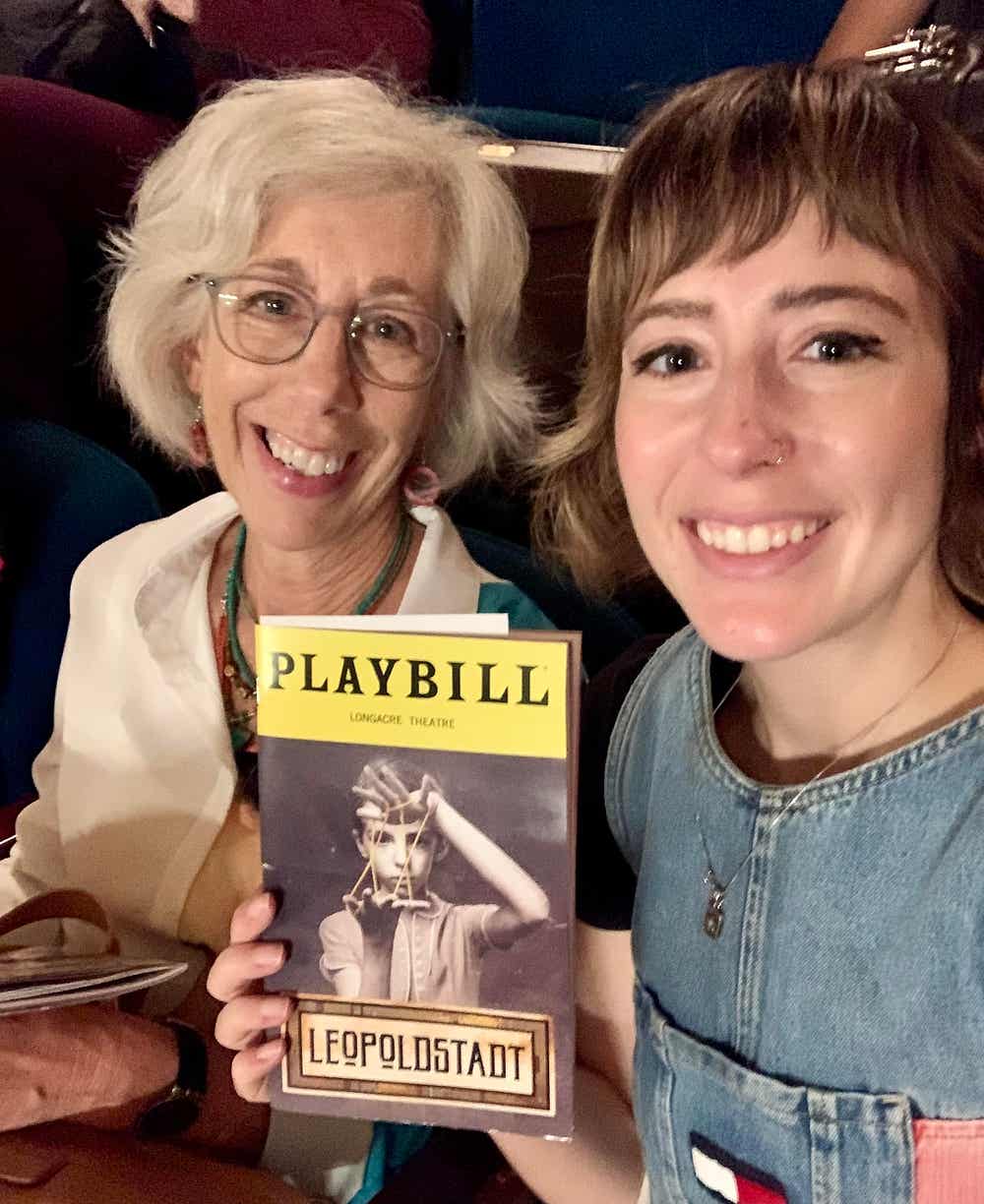
We’re probably smiling a bit too much for this play…

Cheshvan questions from two weeks ago:
1) What’s holding you back from being your best self? 2) In what ways do you experience your fullest spiritual self?
“What’s holding me back from being my best self: figuring out who I am and not trying to mold that person to my environment. Most spiritual: Journaling and/or painting or running”
“1. I think fear of being judged is holding me back. I know that’s very cliche sounding, but I’m specifically afraid of using my voice. It holds me back because I can’t really give myself the chance to learn from my mistakes and give other people the chance to hear what I have to say. Maybe I would find that my voice is important.
2. Dang that’s a hard question. I guess I feel my fullest spiritual self when I have the opportunity to empower others to use their strengths. I love making harmony among a group and encouraging people to use their strengths.”
“I am my fullest spiritual self when I am performing or making others laugh!”
Kosher Duck Revolution is an initiative of AIC. Join AIC. Membership starts at $9 a month.